Sponsorships: Bundle or Walk Away
9.2.2026
Here’s the quiet lie behind most sponsorships: “Branding will turn into pipeline.”
It can… but only if you give branding something to attach to.
Because most sponsorship packages are built around what’s easy for organizers to sell: logos, banners, lanyards, apps, signs, “visibility.” That inventory looks impressive in a proposal deck. It also looks great in a post-show recap email.
And then you get back to the office and realize you can’t answer the only question that matters:
Did that sponsorship create pipeline… or did it just create “we were there”?
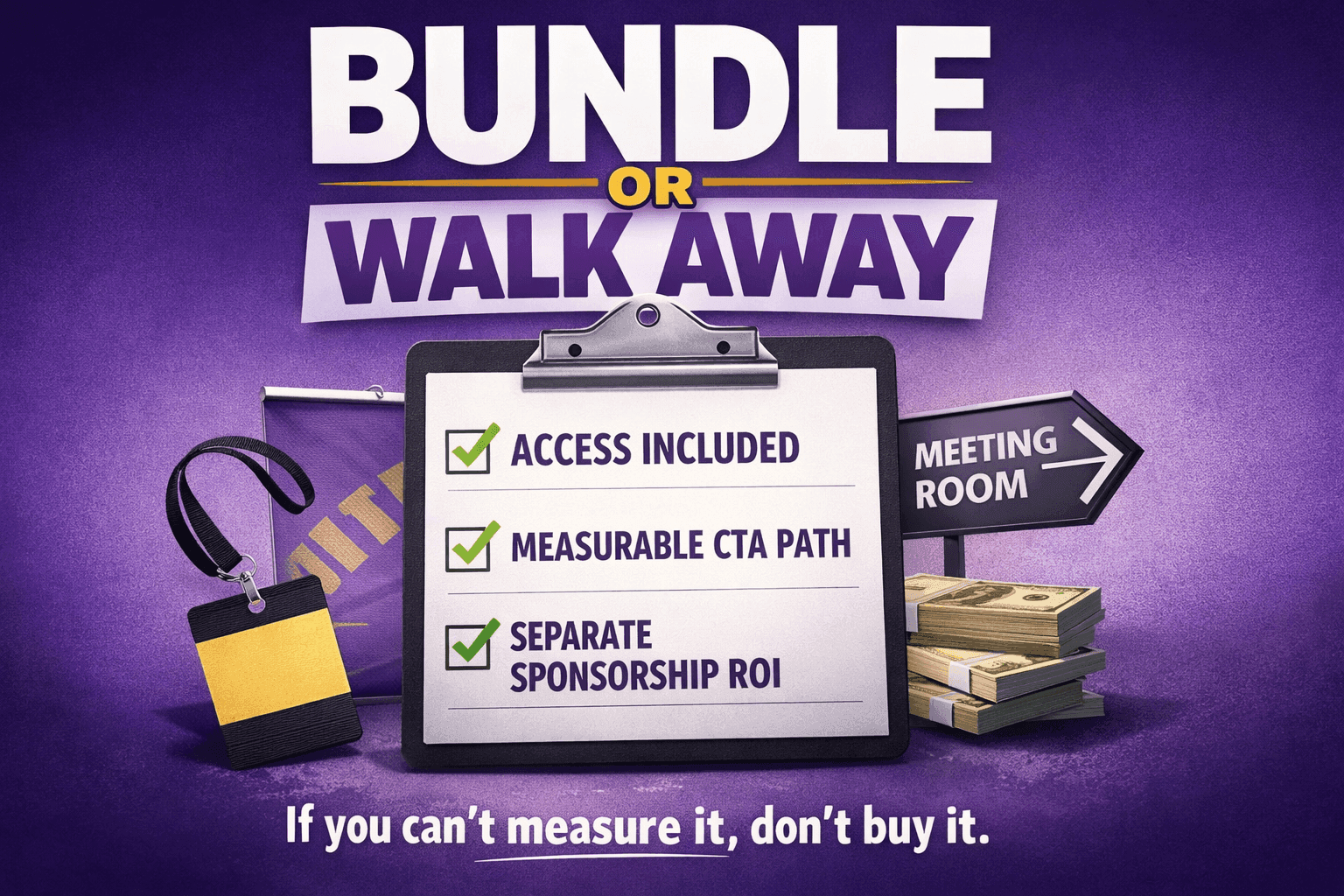
A sponsorship isn’t a strategy. It’s inventory. Inventory only becomes valuable when it comes with two things:
- Access (people you can reach)
- A conversion path (a clear action you can measure)
If you don’t have both, you’re not buying growth. You’re renting a logo spot.
What sponsorships really are: inventory with a price tag
Think about your booth for a second.
A booth isn’t magic either. It’s inventory: square footage, a backdrop, and an opportunity to have conversations. The booth works when you staff it, qualify, book meetings, and follow up fast.
Sponsorships are the same.
They only work when you turn “visibility” into a measurable path:
- visibility → attention
- attention → action
- action → meetings
- meetings → pipeline
That middle step is where most sponsorship ROI disappears.
The bundling test: how to make sponsorships earn their keep
When you evaluate any sponsorship, ask one simple question:
What can we bundle with this so it becomes measurable?
You’re looking for bundles that create access and a conversion path.
Bundle #1: Access
Access is anything that gets you closer to real people, not just impressions.
Examples of access bundles:
- Attendee list (or opt-in list) with a defined use case
- Hosted meetings (pre-scheduled, qualified)
- Speaking slot (with a capture mechanism)
- Hosted reception / hosted roundtable (with invited attendees)
- VIP tours / hosted buyer programs (if relevant to your audience)
If your sponsorship doesn’t come with access, the organizer is basically saying:
“We’ll show your logo to strangers and hope something happens.”
Hope is not a tactic.
Bundle #2: A measurable conversion path
A conversion path means you can track what action happened because of this sponsorship.
Examples of measurable paths:
- A tracked landing page (with a clear offer: meeting request, demo slot, assessment)
- A meeting program tied to the sponsorship (“Sponsored by ___” + booked time slots)
- A scan-to-book CTA (QR that schedules, not just collects)
- A session CTA (“Scan this code to book a 15-min consult”)
- A post-session email sent by the organizer with your CTA (and tracking)
If all you have is “brand lift,” you’ll be stuck in post-show storytelling instead of reporting.
The hidden trap: booth ROI will cover up sponsorship ROI
One of the biggest reasons companies keep buying weak sponsorships is simple:
They never separate the numbers.
When you blend “the booth” and “the sponsorship” into one ROI bucket, good booth performance can hide a bad sponsorship. You’ll tell yourself the show “worked,” sign the same sponsorship again next year, and repeat the cycle.
Fix: track sponsorship ROI as its own line item.
At minimum, create a simple sponsor scorecard:
- Cost of sponsorship
- What it included (access + CTA path)
- Leads / meetings attributed to sponsorship CTA
- Pipeline attributed (even if early-stage)
- Lessons learned (what to bundle next time)
A quick micro-story you’ll recognize
Two sponsors. Same event. Same price.
Sponsor A: “We’ll take the lanyard sponsorship.”
Result: lots of photos, zero measurable outcomes, and a post-show debate about whether it “helped.”
Sponsor B: “We’ll sponsor the workshop… if it includes a CTA + attendee follow-up.”
They bundled:
- a workshop slot
- a tracked QR to book meetings
- an organizer email to attendees with the booking link
Result: a stack of booked meetings and a clean attribution path.
Neither sponsor “got lucky.” One sponsor bought inventory. The other built a conversion path.
The script: what to ask before you sign
Use these questions to force bundling and measurement into the package.
Access questions
- “What access does this include beyond logo placement?”
- “Is there an attendee list component? If not, what opt-in list can we create?”
- “Can this include hosted meetings or introductions with our target persona?”
- “Can we tie this to a session/roundtable where we can engage directly?”
Conversion path questions
- “What CTA can we attach to this that we can track end-to-end?”
- “Can we use a tracked link/QR and report scans, clicks, and conversions?”
- “Can the organizer include our CTA in a post-session or post-event email to attendees?”
- “How will you report results, and what data will we receive after the event?”
The line that changes the conversation
If they say: “This is mostly branding,” reply:
“Cool — what can we bundle with it so we can measure it?”
If the answer is “nothing,” you have your answer.
Walk away.
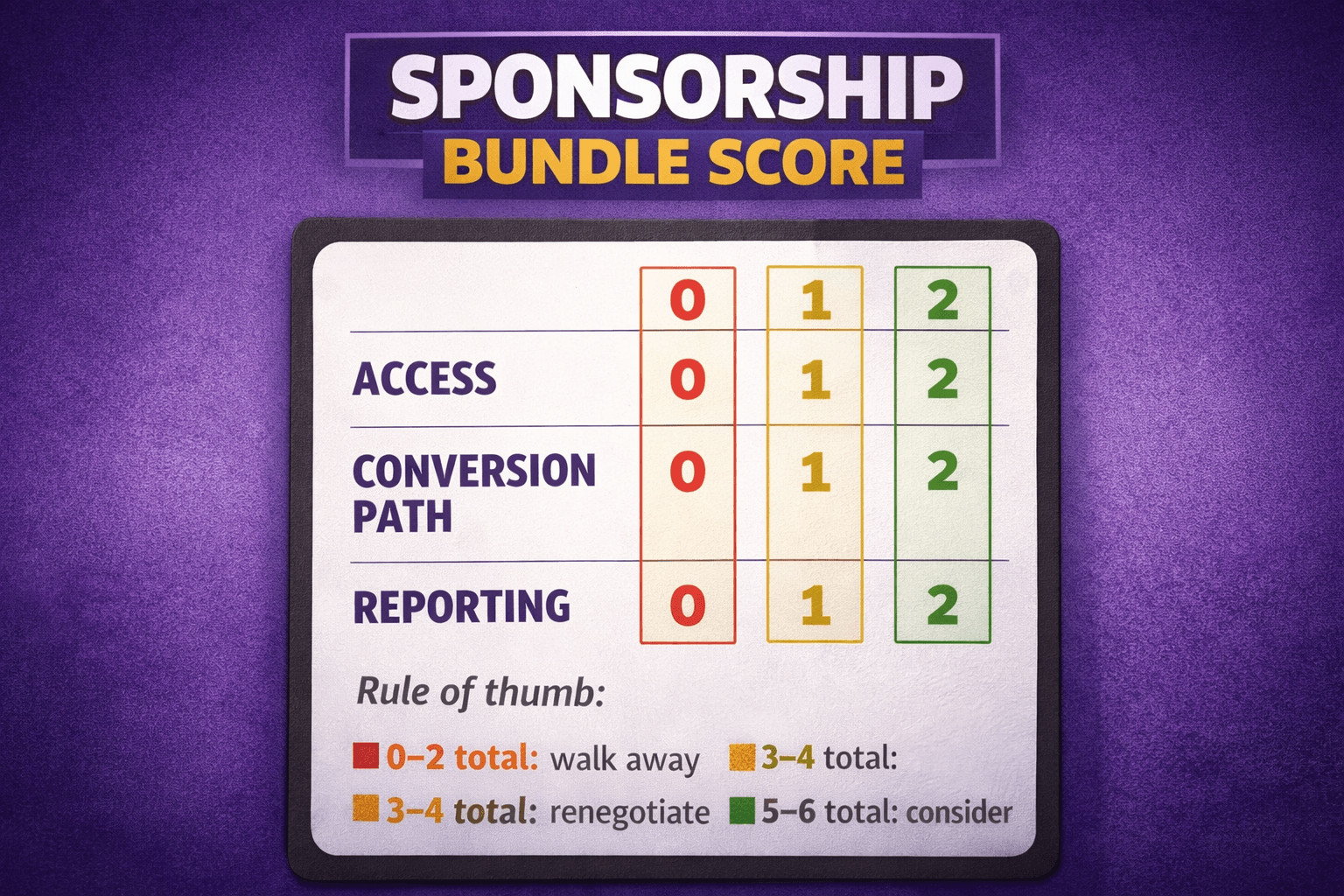
Template tool: the Sponsorship Bundle Score (simple, ruthless)
Score each potential sponsorship 0–2 in each category:
Access (0–2)
- 0 = logo-only, no list, no meetings, no touchpoints
- 1 = some access, but limited/unclear (e.g., vague “lead retrieval”)
- 2 = real access (opt-in list, hosted meetings, speaking with capture, hosted event)
Conversion Path (0–2)
- 0 = no CTA, no tracking, “brand awareness” only
- 1 = CTA exists but weak or hard to attribute
- 2 = clear CTA + tracking + reporting
Reporting (0–2)
- 0 = nothing beyond impressions
- 1 = partial (scans/clicks only)
- 2 = usable report (scans/clicks + list + meeting outcomes + timeline)
Rule of thumb:
- 0–2 total: walk away
- 3–4 total: buy only if you can renegotiate bundles
- 5–6 total: worth serious consideration
PURPLE RULE
If you can’t measure the sponsorship, don’t buy it.
Purple Quick Hits
- The Point: A logo alone is rarely worth the check.
- What Most People Do: They buy visibility and hope it becomes pipeline.
- What Works Instead:
- Bundle sponsorship with access: attendee list, hosted meetings, speaking
- Require a measurable CTA path (landing page, meeting program)
- Track sponsorship ROI separately from booth ROI
- Do This Tomorrow:
- Rewrite sponsorship goals as measurable outcomes (meetings, sessions, list)
- Ask what inventory can be bundled
- Say no to any sponsorship without a conversion path